
Key Takeaways
According to CryptoSlate, BlackRock's IBIT narrowly outperformed Vanguard's VOO since 2024 despite a 53.30% drawdown.
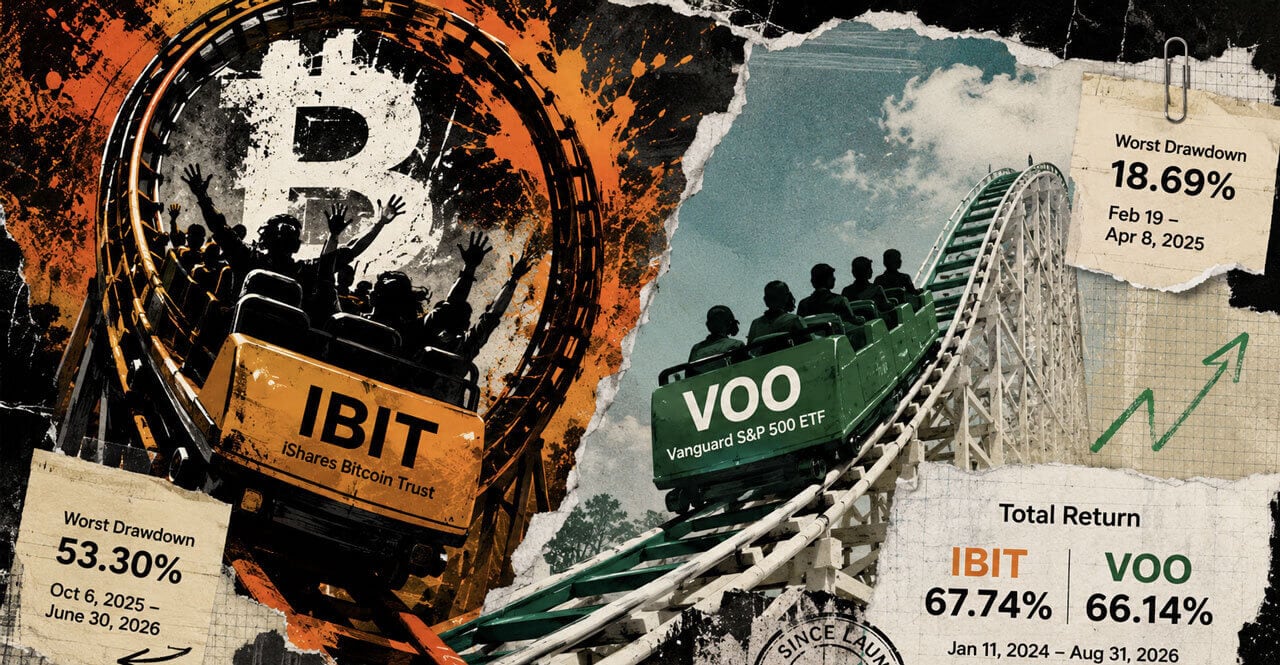
According to CryptoSlate, BlackRock’s iShares Bitcoin Trust (IBIT) returned 67.74% from its January 11, 2024 debut through August 31, narrowly outperforming Vanguard’s S&P 500 ETF (VOO), which returned 66.14% over the same period. CryptoSlate reported that this small advantage of 1.60 percentage points came after Bitcoin surged to a record high and subsequently dropped during a downturn.
Bloomberg senior ETF analyst Eric Balchunas noted that the performance gap remained narrow despite Bitcoin enduring a bearish mood from October through July. CryptoSlate pointed out that the similar final gains concealed sharply different investor experiences. While VOO experienced a maximum drawdown of 18.69%, IBIT suffered a peak-to-trough decline of 53.30% between October 6, 2025, and June 30, 2026.
Bitcoin traded near $47,000 during the ETF launches in January 2024, later reaching a record high of around $126,000 in 2025 following Donald Trump's election victory, before falling as low as approximately $58,000 and recovering to around $77,000. BlackRock has since recommended a 2% BTC allocation for investors. As noted by CryptoSlate, IBIT manages about $60 billion in assets with $63 billion in inflows, while VOO crossed $1 trillion in net assets in June 2026.
Source & Fact-Check Note
This report is synthesized from coverage by CryptoSlate. Information has been fact-checked and structured for market clarity by CoinQuickly’s research desk.
Read original article at CryptoSlate ↗