Key Takeaways
CryptoSlate reports Bitcoin confirmed its first quantum-safe mainnet transaction, while 7 million BTC remain exposed.
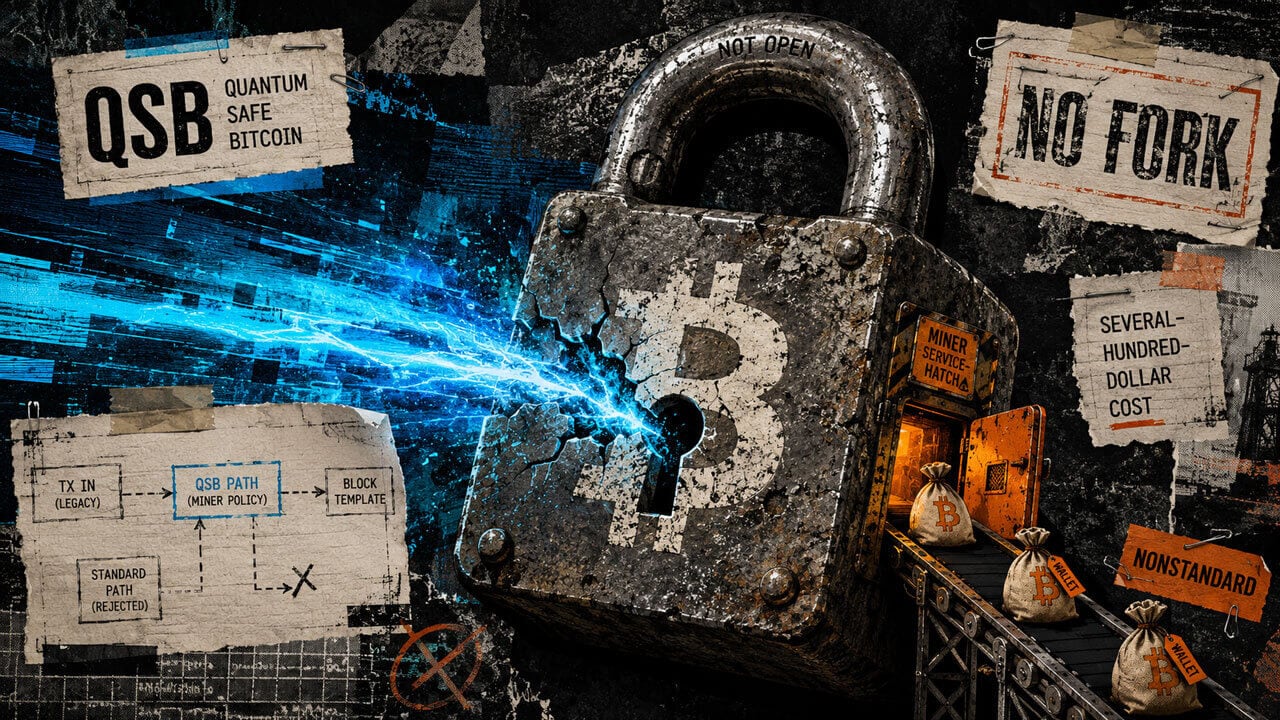
According to CryptoSlate, Bitcoin has confirmed its first quantum-safe mainnet transaction using existing consensus rules. The Aug. 26 transaction utilized a construction developed by StarkWare researcher Avihu Levy, shifting the spending condition from elliptic-curve signatures to hash-based security. The transaction was included in block 964,199 after being submitted directly to Bitcoin miner MARA through its Slipstream service.
StarkWare Chief Executive Eli Ben-Sasson stated the test does not mean Bitcoin is prepared for quantum computing, noting that broader soft-fork solutions are still required. The Quantum-Safe Bitcoin method offers a migration path for holders whose public keys remain hidden behind a hash until spent. However, approximately 7 million BTC remain potentially exposed because their public keys are already visible through older pay-to-public-key outputs, Taproot outputs, or address reuse.
Additionally, the method remains nonstandard and costly, requiring direct miner submission and additional computational expense. Meanwhile, institutions have pledged funding toward security research, and the US Treasury has included digital assets in quantum-readiness planning, leaving Bitcoin to address migration tools for hidden keys and a protocol-level answer for exposed coins.
Source & Fact-Check Note
This report is synthesized from coverage by CryptoSlate. Information has been fact-checked and structured for market clarity by CoinQuickly’s research desk.
Read original article at CryptoSlate ↗