
Key Takeaways
CryptoSlate reports that a BIS working paper shows institutional XRP Ledger usage may not cause the expected supply squeeze due to batching.
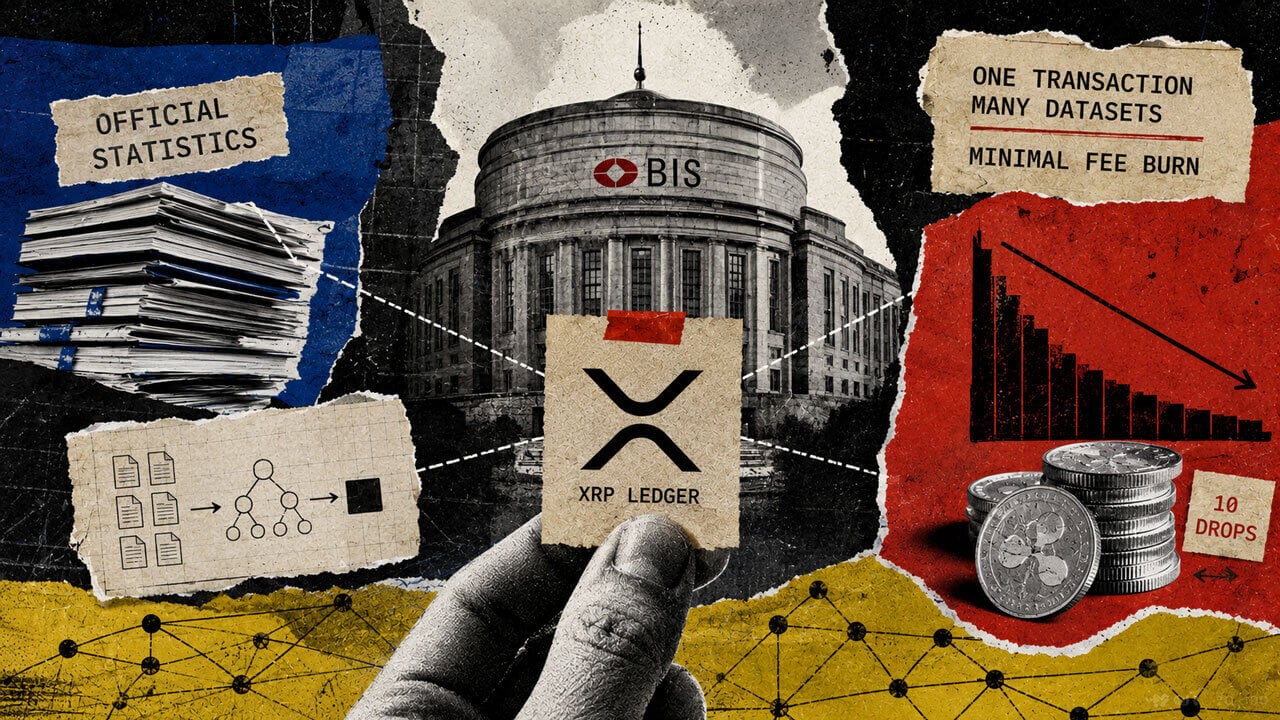
According to CryptoSlate, the Bank for International Settlements released a working paper detailing an experimental XRP Ledger prototype that checks the authenticity of official statistics. The system converts statistical files into cryptographic fingerprints and anchors a summary on XRPL using a Merkle tree structure, keeping underlying data off-chain.
Reported by CryptoSlate, the research demonstrates that a single ledger transaction can anchor thousands of datasets. This batching mechanism keeps direct fee burns minimal even as institutional-style usage scales, creating a split verdict for XRP. While the prototype validates XRPL for institutional use, its design compresses recurring fee flows.
CryptoSlate noted that material XRP demand would require sustained Mainnet usage, new accounts, or broader activity beyond the experimental proof of concept. The prototype utilized test XRP on the DevNet, generating no real-world token demand. Production usage could increase held XRP if new institutional accounts are created, but dataset throughput alone will not trigger the massive supply squeeze expected by some holders.
Source & Fact-Check Note
This report is synthesized from coverage by CryptoSlate. Information has been fact-checked and structured for market clarity by CoinQuickly’s research desk.
Read original article at CryptoSlate ↗